AMONG US
A Place of Belonging: Art Therapy for Exile and Autism
Thesis Studio | Architecture of Exile
Key Theme: Sensory-informed art spaces for exiled and autistic communities
Key Words: Exile, Jiangsu culture, Neurodiversity, Safe Space, Art Therapy, Weaving, Sensory-controlled Space
Location: Argyle Stairs, The Rocks, Sydney, NSW, Australia
Studio: Thesis Studio – Architecture of Exile
Tutor: Dr. Laurence Kimmel
Year: 2025
Work Type: Individual Project
Project Overview:
This project examines how architecture can support people who experience two kinds of displacement: geographic displacement and neurodivergent isolation. It responds to the lack of spaces that can ease sensory stress, reconnect cultural memory, and offer a stable sense of belonging.
Context:
The project grows from two personal and cultural experiences.
The first is the feeling of distance from Jiangsu and the quiet domestic environments that shaped early childhood memory.
The second is the lived experience of AuDHD, where sensory intensity and social complexity can create an inner form of displacement.
These experiences reveal a shared need that exists in many communities. People need spaces where sensory comfort is protected, cultural memory is held with care, and belonging can develop at a natural pace.
Design Intent:
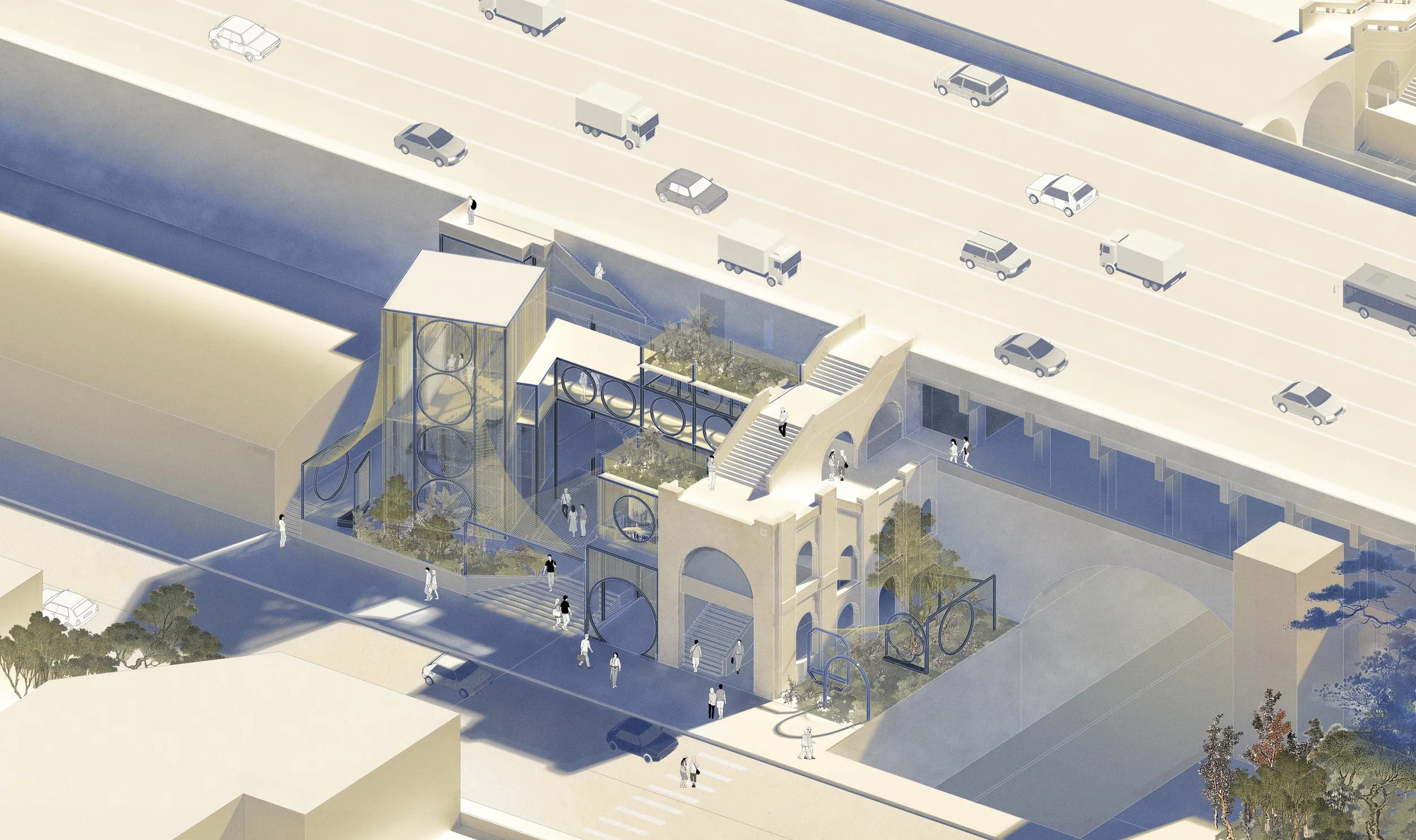
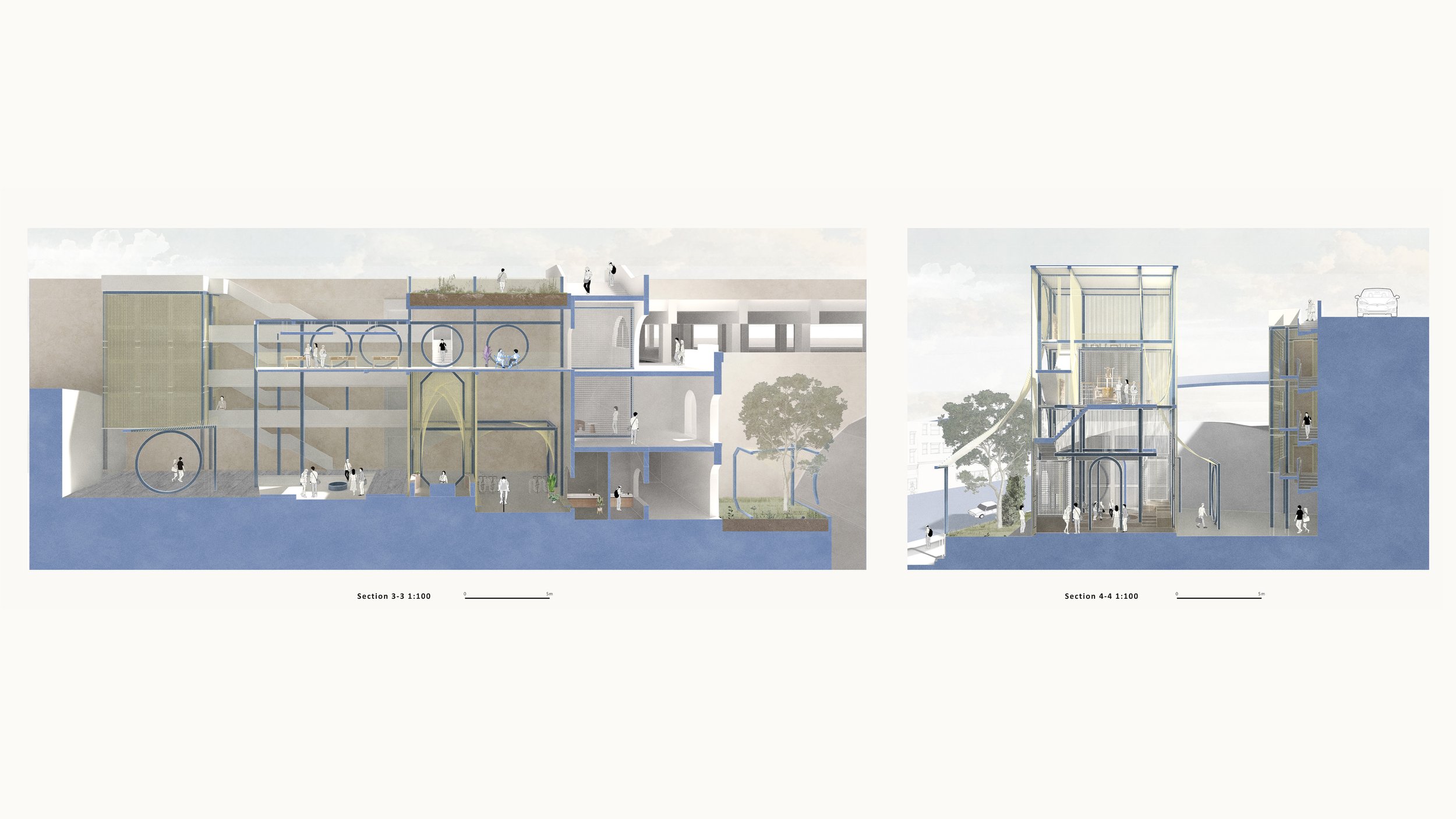
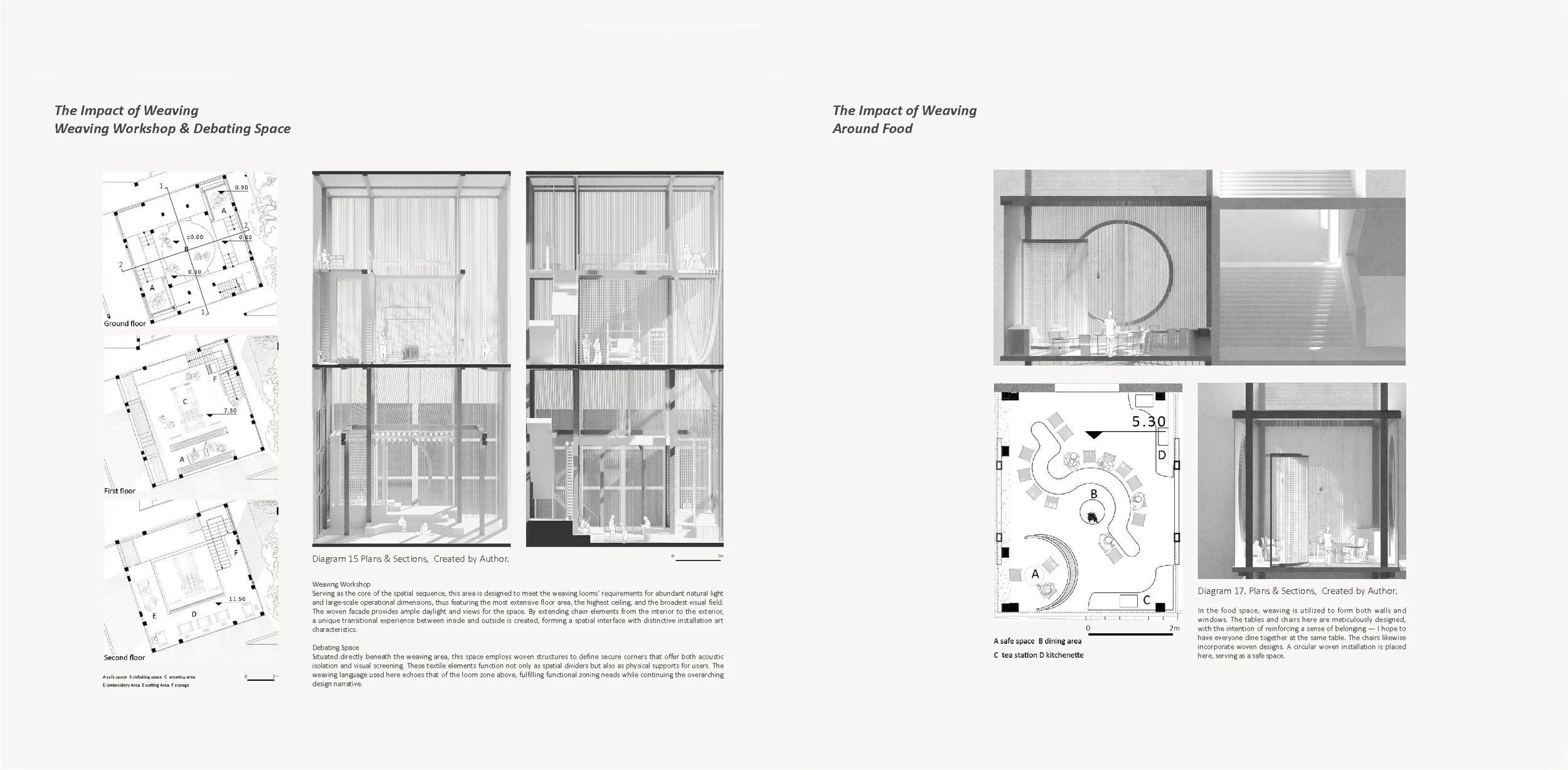
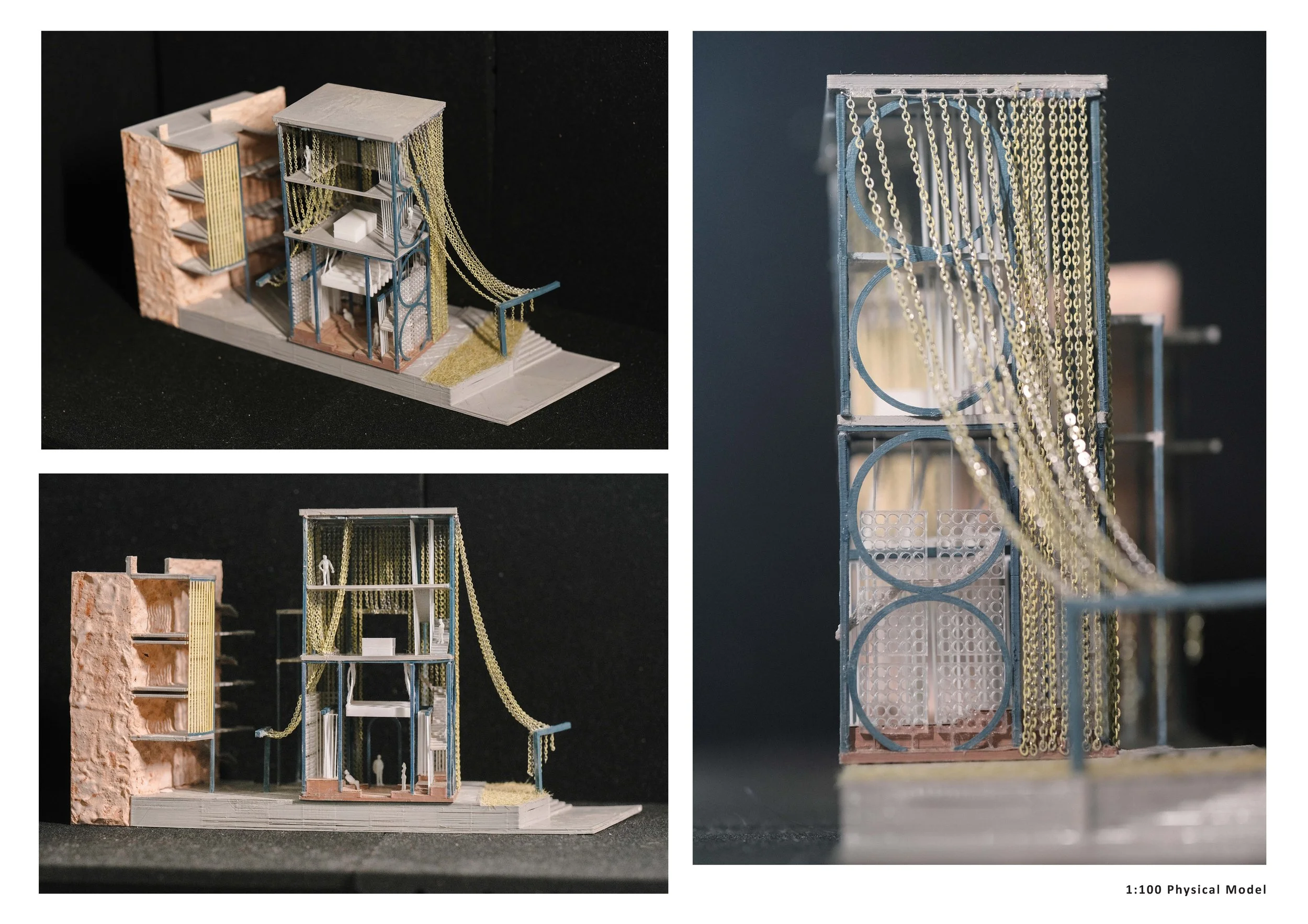
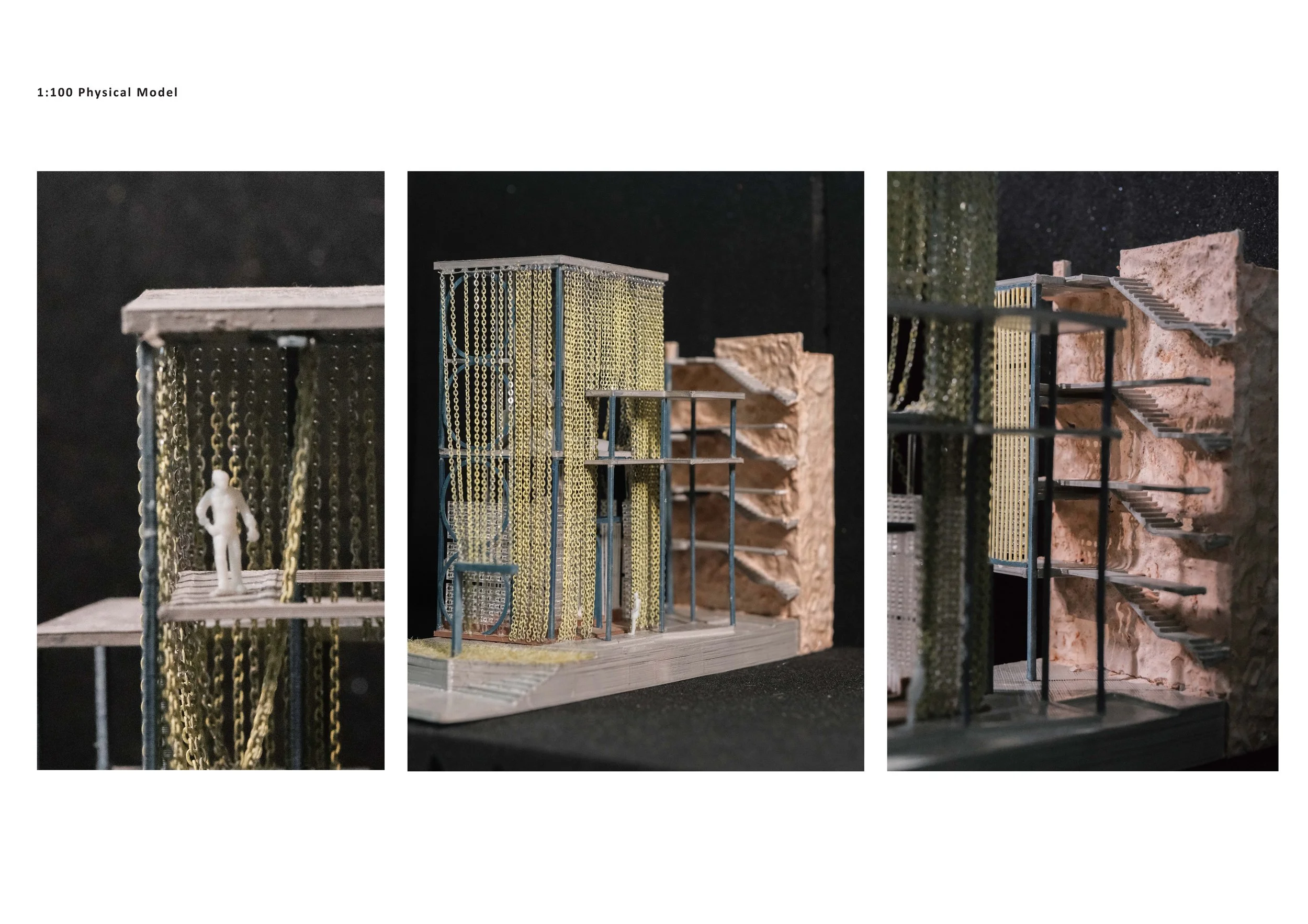
The design transforms Argyle Stairs into a connected system of sensory-informed safe spaces. It draws from Jiangsu spatial traditions, such as framing, layering, woven boundaries and soft thresholds, and combines them with principles used in art therapy.
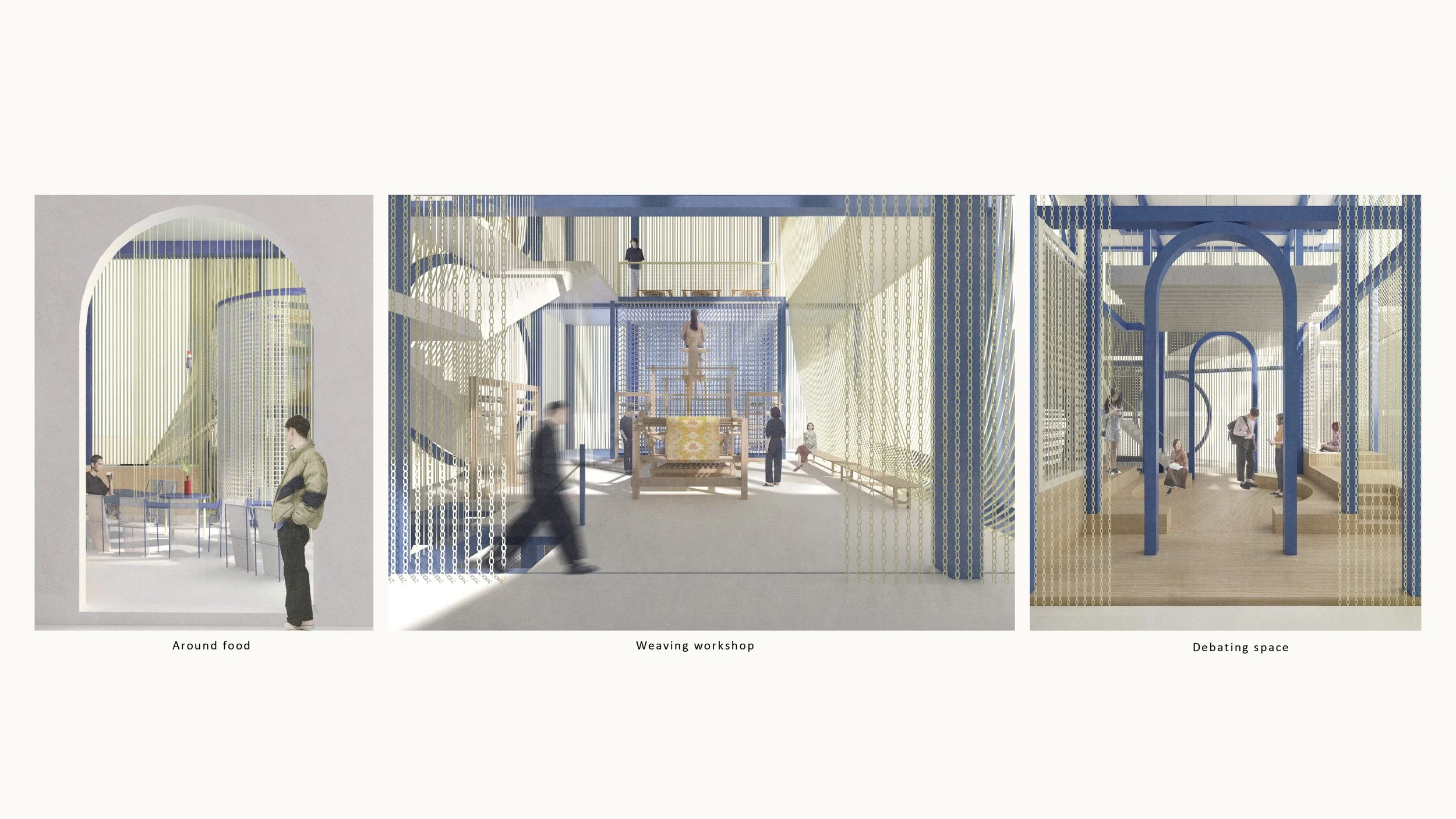
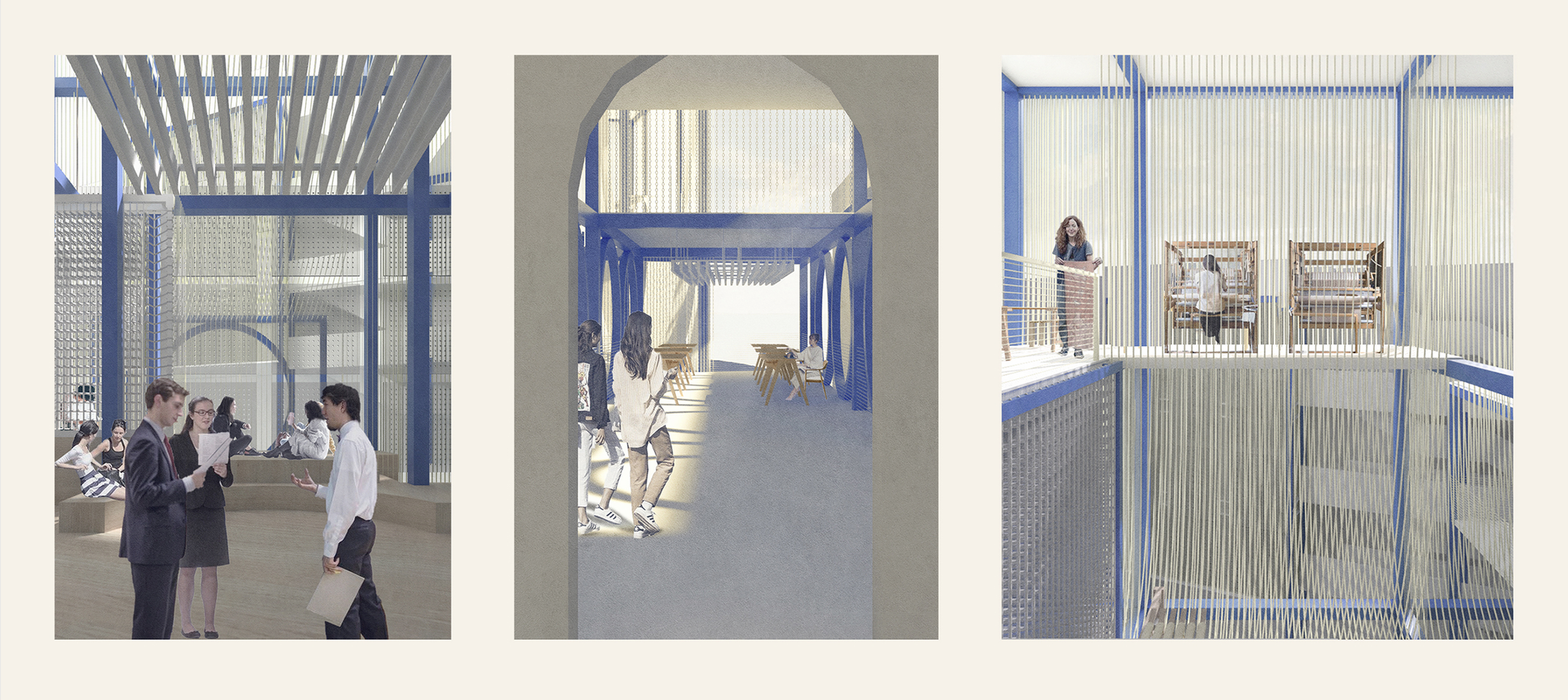
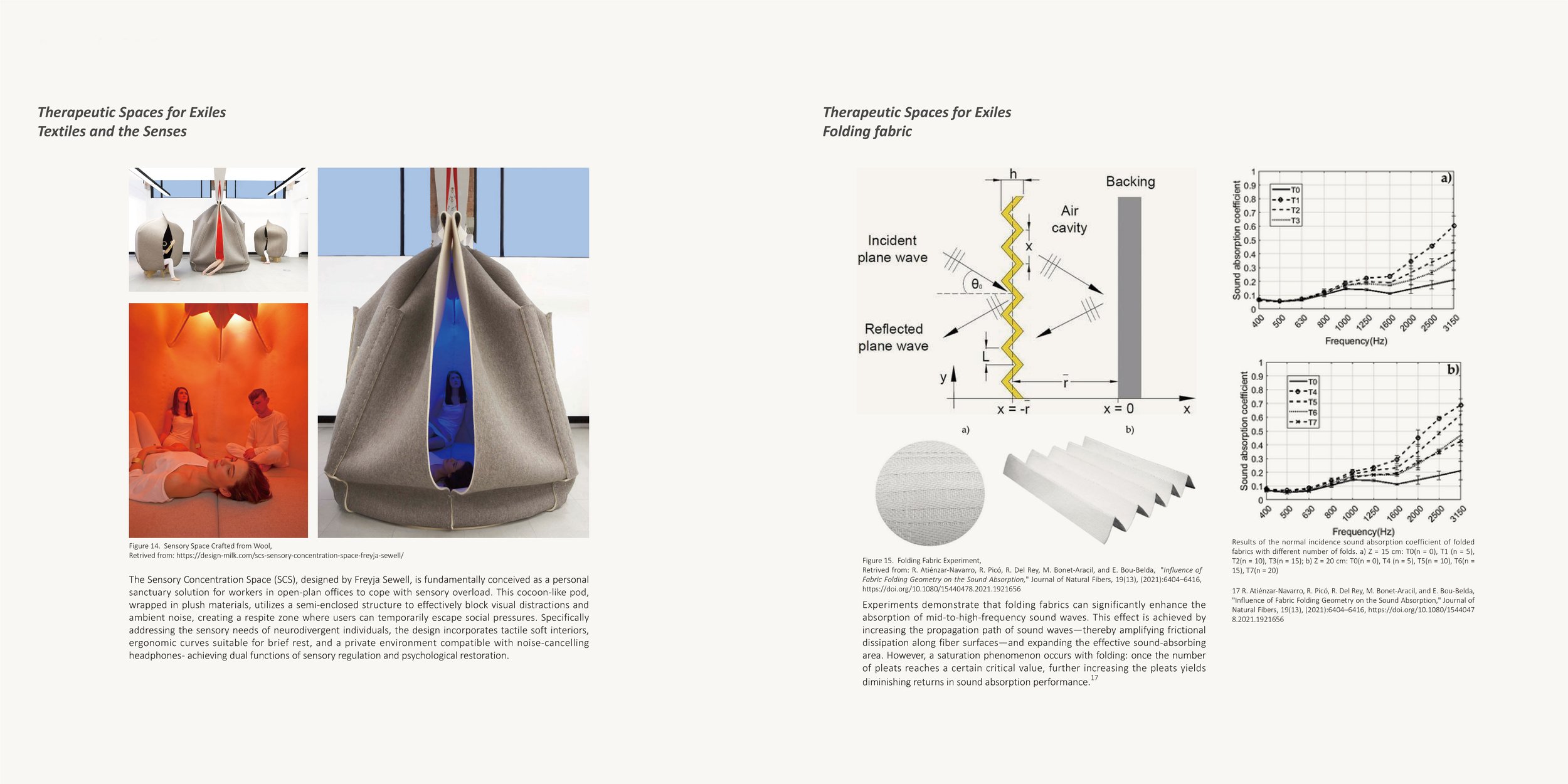
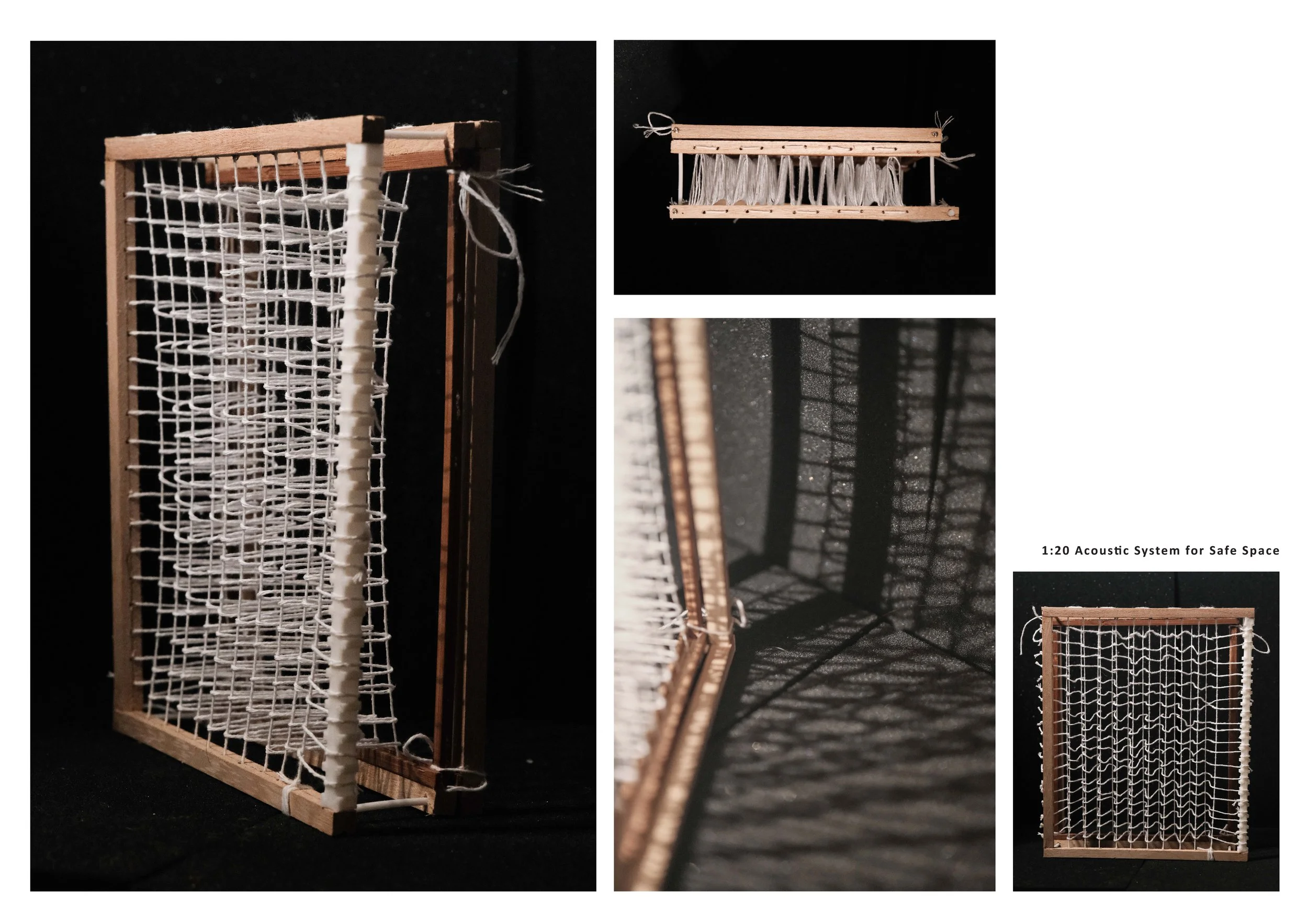
The aim is to create an environment with gentle light, clear textures and controlled acoustics, so that people can reflect, learn, create and gather without pressure.
The intention is to form a place where cultural memory and neurodivergent needs can coexist, and where architecture can support emotional grounding and calm.
Concept Focus:
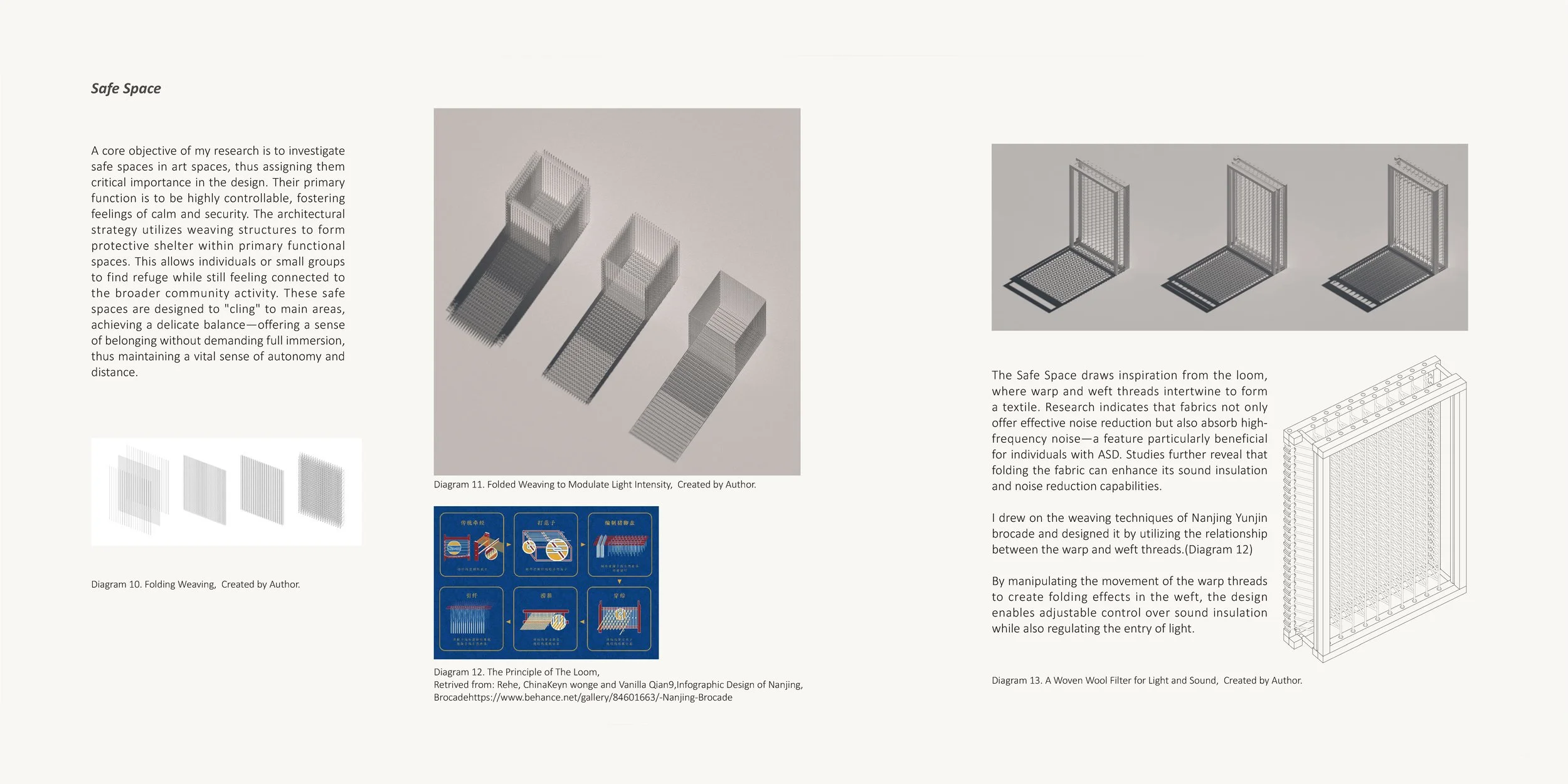
- Safe Space as a sensory-controlled environment
- Weaving as spatial language
- Shared belonging for Jiangsu migrants and ASD community
Spatial Strategy:
- Attach safe spaces to main programmes (food, learning, weaving, debate)
- Use woven metal chains and textiles to modulate light, sound, and privacy
- Organise a processional sequence: Threshold → Welcome → Food → Learning
→ Art-making → Debate → Gather around Fire
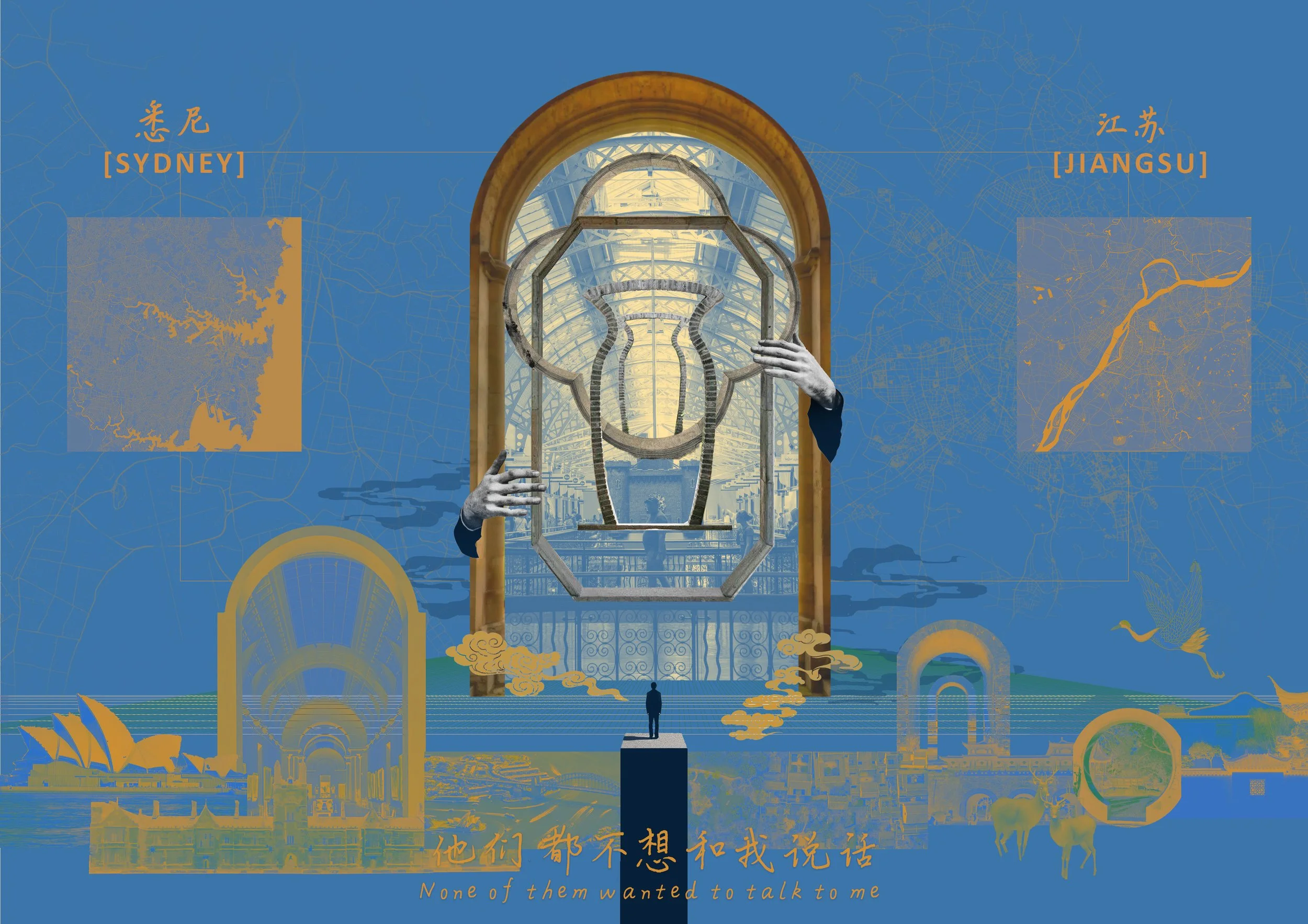
"Do I belong here?"
This existential question lays bare the core dilemma of exile.
Trapped in perpetual self-scrutiny and external validation, they remain suspended in limbo—a psychological nomadism shackled by invisible chains. Their psyche becomes a battleground of contradictions: yearning to assimilate into new communities while clinging to cultural roots, forever stranded in the interstice between worlds. Neither fully reclaiming their homeland nor wholly embraced by adopted societies, they crystallize into eternal
"Others."
"Geographically, I am among 'us'; identically, I do not belong here."
Herein lies the profound parallel between exiles and the ASD community—physical presence within a group seldom translates to genuine cultural inclusion. Our societies obsess over spatial integration while neglecting the deeper architecture of belonging. True assimilation demands more than cohabitation; it requires dismantling barriers to grant equal access, understanding, and dignity.
"Among Us"
This phrase crystallizes the architectural manifesto: crafting spaces where "we" actively enfranchise "I," where belonging is designed rather than demanded. The vision calls for societal metamorphosis—structures that dissolve identity borders through radical hospitality. Only when "we" relinquish prejudices to embrace alterity can the exiled shed their Otherness, transforming the aspiration of "I within We" from metaphor to lived reality.